Korean routine for oily skin: the 5 steps that actually work
In short
- Stripping oily skin makes it oilier: that is the rebound effect.
- Oily skin is very often dehydrated skin.
- Niacinamide is the active that matters. Allow four to six weeks.
- Hydrating gel, not rich cream. And sunscreen every morning.
If you have oily skin, you have probably been told to « cleanse it thoroughly ». Foaming gel morning and night, a scrub twice a week, blotting wipes in your bag. And you have noticed it does not really work: the skin still shines, sometimes even more by the end of the day.
That is not your fault. The advice is what is wrong.
Why stripping makes it worse
Your skin has a simple objective: to stay protected. When you remove its hydrolipidic film with an overly aggressive cleanser, it registers that as an attack and rebuilds it — in greater quantity, so as not to be caught out again.
This is the rebound effect. You spend an hour with matte, comfortable skin, then the sebum comes back with force. And because you see it shining, you strip it again. The circle is complete.
The second thing few people know: oily skin is very often dehydrated skin. Oily and dehydrated are not contradictory — oil is sebum; hydration is water. Skin short of water compensates by producing sebum.
The Korean approach starts from there. You stop attacking, you hydrate, and the sebum regulates itself within four to six weeks.
Step 1 — Double cleansing, evenings only
A balm or cleansing oil first. Yes, oil on oily skin. Oil dissolves oil: that is elementary chemistry, and it is far more effective than a foaming gel at removing sebum lodged in the pores and sunscreen residue.
Then a gentle water-based cleanser. The test is simple: if your skin feels tight after rinsing, the product is too strong. Clean skin should feel supple, not rough.
In the morning, a simple rinse with lukewarm water is enough. You did nothing dirty during the night.
Step 2 — A gentle exfoliant, twice a week
No grainy scrubs. Ever. Micro-beads create micro-lesions and the skin reacts exactly as it does to stripping.
Instead, a chemical exfoliant. Salicylic acid (BHA) is the one that concerns you: it is oil-soluble, so it goes down into the pore and dissolves the sebum plug, whereas AHAs stay on the surface.
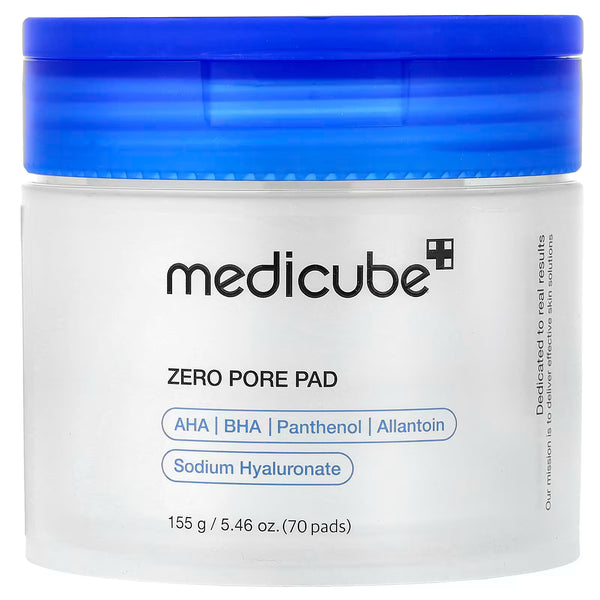
Two to three times a week, in the evening, never more. Exfoliating toners and soaked pads are the most practical formats.
Step 3 — Niacinamide, every day
This is the most useful active for you, and one of the best documented in cosmetics.
Niacinamide does three things at once: it regulates sebum production, it visibly tightens pores, and it strengthens the skin barrier. It is well tolerated, combines with almost everything, and does not make skin sun-sensitive.
You will find it in toners, serums or creams. A concentration of 5 to 10 % is plenty: beyond that, you mostly gain tingling.
Allow four to six weeks before seeing the difference on pores. It is slow, but it is real.
Step 4 — Hydrate, properly
This is the step oily skin skips, and it is the one that changes everything.
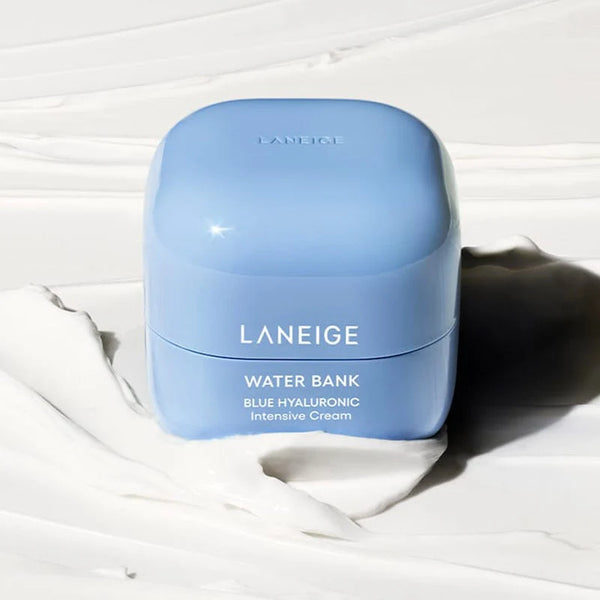
The secret is texture. You do not need a rich cream: a gel or a gel-cream with hyaluronic acid brings water without bringing oil. You hydrate without weighing the skin down.
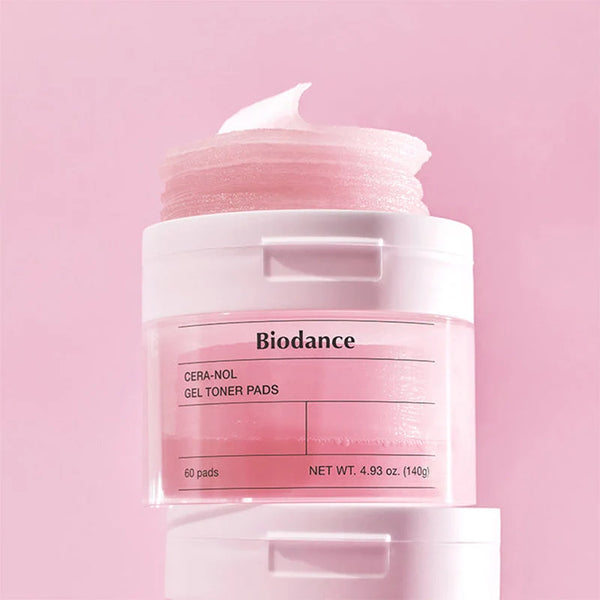
The Korean method layers several thin coats rather than one thick one: a watery essence, then a gel. Each layer absorbs before the next, and you apply on still-damp skin — you have about thirty seconds after cleansing.
Look at hydrating products with a gel texture.
Step 5 — Sunscreen, every morning
The usual excuse: « it makes me shine ». That was true ten years ago with European formulas.
Korean sunscreens solved exactly this problem. There are matte-finish versions, in serum texture or as sticks, that leave neither a white film nor a greasy feel. That is precisely why they have taken over worldwide.
And it is non-negotiable: the sun thickens the outer layer of skin, which clogs pores further. Without protection, the four previous steps work at a loss.
Three things to stop tonight
Blotting wipes. They remove surface sebum and trigger the rebound effect within the hour. Blotting paper, at a push, without rubbing.
Morning cleansing with foaming gel. You are removing what your skin repaired overnight.
Squeezing spots. You turn a three-day inflammation into a six-month brown mark. A hydrocolloid patch worn overnight does the job for you, and above all stops you touching.
What to expect, and when
Weeks 1 to 2: nothing spectacular. The skin is perhaps a little more comfortable. Change nothing.
Weeks 3 to 4: end-of-day shine decreases. That is the first reliable sign.
Weeks 6 to 8: pores look cleaner, texture is more even, and you no longer need to blot during the day.
The trap at this stage is wanting to speed things up by adding products. Do not. A five-step routine kept every day beats a ten-step routine kept every other week.
Where to start, concretely
If you were to buy only three things: a gentle cleanser, a niacinamide toner, a hydrating gel. That is enough to see the difference.
Our skin diagnostic tells you in two minutes which ones suit your skin, and in what order to apply them. And if you would rather we had done the sorting, the clear pores routine set brings together three products chosen to work as one.
You can also browse our oily skin selection directly.