Centella asiatica: why “tiger grass” is everywhere in K-beauty
In short
- Centella asiatica is a plant: its actives soothe the skin and support the skin barrier.
- On the label it also goes by cica, madecassoside or asiaticoside.
- Ideal for sensitive skin, skin prone to redness, or skin worn out by too many actives.
- It pairs with almost everything: retinal, acids, vitamin C.
You can't browse a shelf of Korean skincare without coming across it. Ampoules, creams, toners, pads, sunscreens: centella asiatica, often shortened to cica, has become the signature ingredient of K-beauty.
Its nickname, “tiger grass”, comes from an Asian legend: wounded tigers were said to roll in the plant to soothe their injuries. A nice story. The reality is simpler, and more useful: it's one of the best-tolerated actives there is, and it helps almost every skin type.
What it is, exactly
Centella asiatica is a small creeping plant that grows in the wetlands of Asia and Madagascar. Its leaves contain four molecules of interest for the skin: madecassoside, asiaticoside, madecassic acid and asiatic acid.
On an INCI list you'll find it as Centella Asiatica Extract, Centella Asiatica Leaf Water, or directly under the name of one of those molecules. The higher it appears on the list, the higher the dose.
What it does for your skin
It soothes. That's its main role. Passing redness and the feeling of heat after sun, shaving or an overly strong product settle down faster.
It supports the skin barrier. It helps the skin hold on to water and defend itself better. That's why you find it in almost every repair routine, alongside ceramides and panthenol.
It hydrates gently, without a greasy feel. Centella textures are often light, which makes them a good choice for combination to oily skin that doesn't get on with rich creams.
It keeps strong actives company. Used alongside a retinal or an exfoliant, it helps the skin tolerate them better.
Who is it for?
For pretty much everyone, but especially:
- sensitive or reactive skin that reddens easily;
- skin prone to blemishes, which needs calm rather than aggressive actives;
- skin weakened by an overloaded routine (see our article on the damaged skin barrier);
- K-beauty beginners looking for a first, risk-free product.
How to fit it into your routine
The golden rule: one centella product is enough, two at most. There's no point stacking five.
As an ampoule or serum, it's at its most concentrated. A few drops after toner, morning and evening. SKIN1004's Madagascar Centella Ampoule is the benchmark: a short formula built around centella.
As pads, for a quick morning step. Torriden Balanceful Cica Toner Pads replace toner and cotton in one go.
As a cream, to keep the soothing effect going all day: the Madagascar Centella Cream for a light texture.
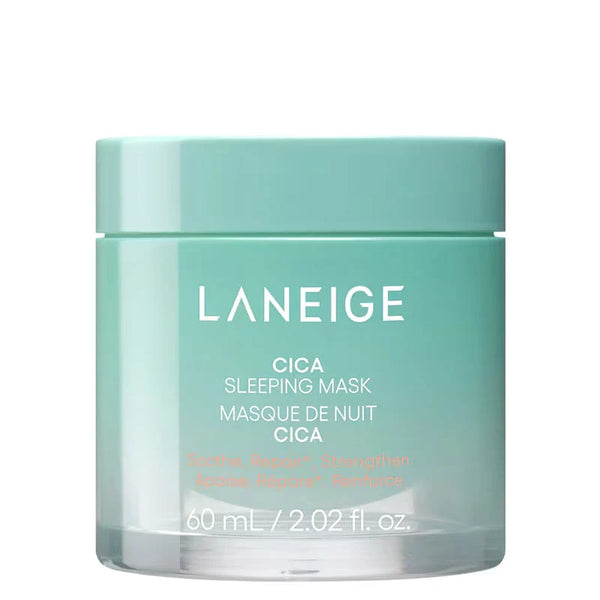
As a sleeping mask, after a tough day for your skin: the Laneige Cica Sleeping Mask.
What to pair it with
Centella gets along with almost everything. It's particularly useful with:
Retinal or retinol: it helps you through the first few weeks. See how to start retinal.
Exfoliants (AHA, BHA, PHA): applied afterwards, it calms the skin.
Niacinamide: a classic duo for combination, blemish-prone skin.
Any side effects?
Very rarely. Centella is one of the best-tolerated actives. Like any plant, though, it can cause a reaction in people who are allergic, particularly to plants in the same family as celery or carrot. If in doubt, test the product for two or three days on a small area, on the neck or behind the ear.
Browse all our soothing products, or take the skin diagnostic to find the format that suits you.